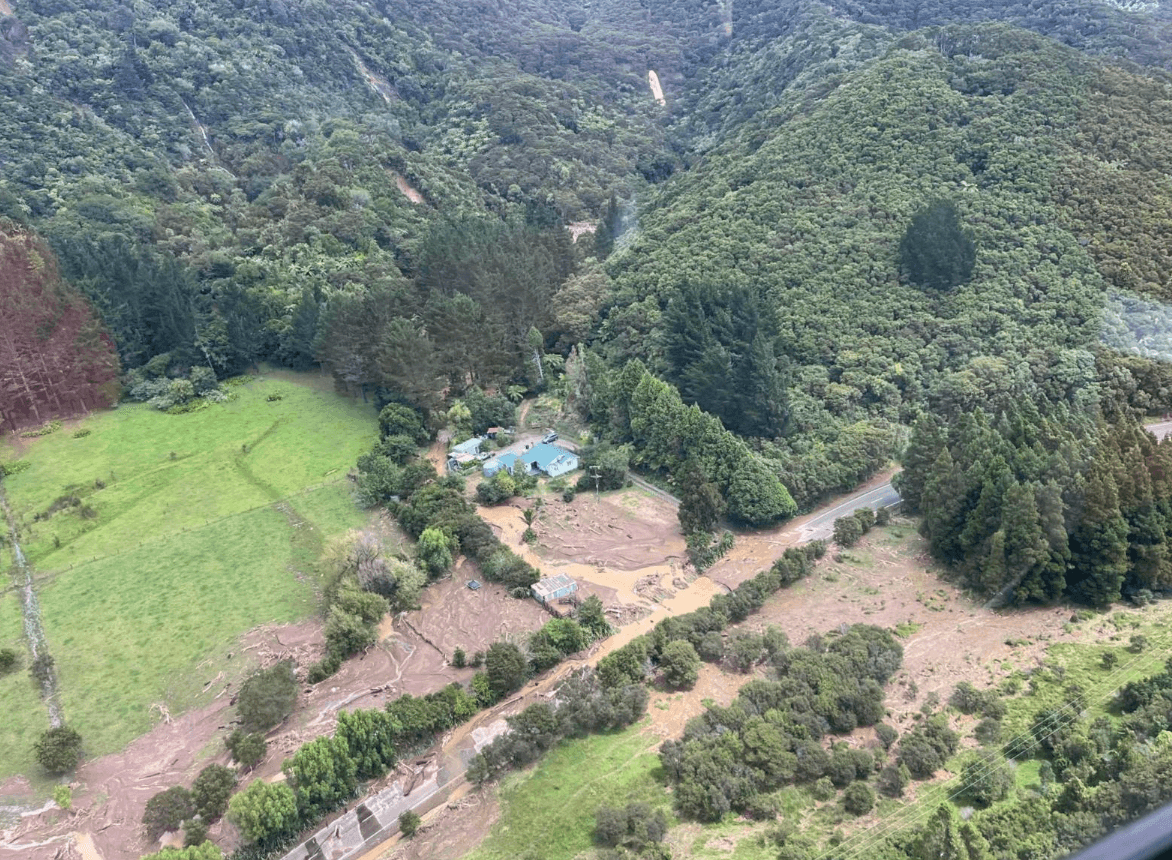
Aerial view of flood damage near Te Araroa. Photo/Te Araroa Civil Defence FB
The devastating storms that swept the North Island last month have left a mark on communities far and wide. From Northland, to Coromandel, Bay of Plenty and down to Te Tairāwhiti communities, large and small, rural and urban have been hit hard.
As cleanup efforts continue and many families continue to come to terms with the tragic loss of life, communities are displaying resilience that has become all too familiar across the country.
In Tauranga Moana, where 6 people died after a landslide on Mauao and a grandmother and her grandson died in another slip near Welcome Bay, Rev. Vianney Douglas reflected on the outpouring of support demonstrated by the community towards the families and the personnel involved with the recovery.
“It is very sombre down there, but there is a strong presence, a strong rescue service and strong iwi, hapū presence… The focus is on supporting those families.”
For Rev. Vianney the impact of the storm has been twofold. She also has whakapapa to the Te Araroa in Te Tairāwhiti that was cut off from the rest of the country for days due to slips at both ends of the Matakaoa region preventing her and others getting home to help, and locals getting out to seek help.
“There are some fantastic people back at home in Te Araroa and Hicks Bay that are part of the Civil Defence and have great systems going. Unfortunately, they’ve had practice through Covid, but the notion of getting together and supporting our kuia and koroua, yeah.”
Kawakaka-mai-tawhiti
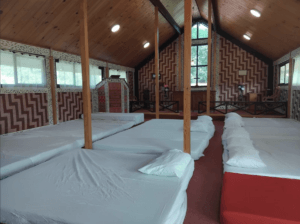
Panapa Tapu in Wharekahika set up ready to shelter whānau. Photo/Te Pāriha o Kawakawa mai Tawhiti FB
Matakaoa is slowly being reopened to the rest of the world as contractors, locals and now the Military, clear debris from the roads and put temporary measures in place where bridges have been washed away.
Rev. Ruawhaitiri Ngātai-Mahue says the community response has been strong, quick and filled with humour to help each other get through.
“When the restock had to be done at the Four Square, they were short-handed on workers, so half of the community helped restock the shelves. And you saw the funny jokes come out, like one of the aunties goes, “sorry whānau, if you see the banana’s next to the shampoo, I put it there with love.”
A fortunate result of the timing of the storm is that the three ministers of the Pāriha o Kawakawa mai Tawhiti happened to be home, coincidentally in three of the locations cut off from each other.
This means that until those communities are reconnected, spiritual and pastoral care can still be on hand. This was evident in Hicks Bay where St Barnabas (Panapa Tapu) opened its doors to shelter whānau who had been evacuated.
“Parts of Hinemaurea Marae were flooded, and the whānau who were there had to go to Onepoto to Te Whare Manaaki o Ruataupare to be accommodated, so the idea came to open St Barnabas. It’s carpeted, so plenty of warmth, we dragged mattresses in and set it up for the whānau who had been flooded. That’s what we the church ministers thought we could do.”
Te Tai Tokerau
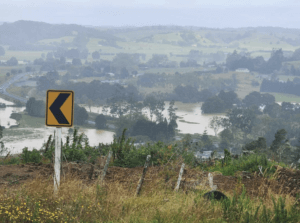
View from above Whakapara. Photo/Whakapara Marae Taumata FB
Northland was also in clean up mode after heavy rain caused flooding and closed roads to rural communities. Rev. Dale Van Engelen is a minister at St Isaac’s Church in Whakapara, and is also involved with Whakapara Marae across the road. She says this time around Whakapara, between Whangārei and Kawakawa, didn’t get flooded as much as it has in the past, however the marae and the hāhi became a place of refuge for the community and their animals.
The church’s Facebook page was an active source of spiritual uplift with parishioners and non-parishioners alike using social media to check in on one another and lend a helping hand where needed.
“If people are feeling a bit anxious, we’ll hear about it. Someone might ask to pray for this one, or that one. And if anybody’s in need, we’ll reach out and say, look, we need some clothing for these people.
“So, we use Facebook and messenger quite frequently to keep in touch with people. And the people who don’t even come to church, we make sure they’re updated onto that as well”.