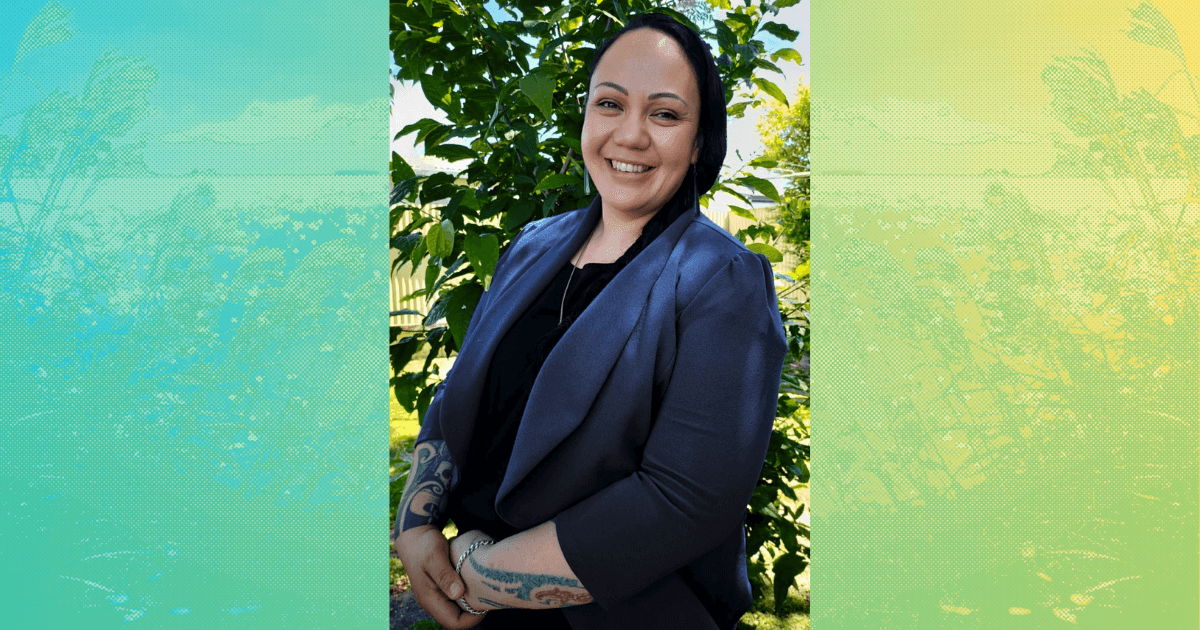
“When I’m in, I’m in 110%. If I commit to something, I follow through. I want the kōhine to know there will be someone who works hard for them — and I expect them to work hard too,” says Evelyn Leef, who will take the reins of the kura in the new year.
Leef heads to Hukarere from Napier Girls’ High School, where she supported Te Reo Māori scholarship students while working towards her Doctor of Education at the University of Waikato. Previously she was Acting Principal at Hastings Girls’ High School, where she served as Head of Māori before becoming Deputy Principal of Curriculum and Pedagogy, something she didn’t feel comfortable with at first.
“I never imagined myself as a leader but over the years in teaching I realised that while Senior Leadership Teams try to engage with Māori initiatives, you can only go so far if you’re not in leadership. So, I had a choice: keep trying from the bottom or step up and do something for our people. If you want to make a difference, you must get uncomfortable and get in the game.
Growing up in the Hokianga village of Panguru, Leef was one of the first students at Te Kura Taumata Panguru as it became a total immersion Māori kura. Panguru is also a stronghold of Te Hāhi Katorika – the Catholic Church in Northland. As such, Leef has developed a deep passion for Māori educational achievement with a strong sense of understanding of whakapono Karaitiana.
“Growing up attending Sunday Mass with my whānau, alongside termly school service at our local Church, was our norm, an integral expression of who we are and our way of being “.
Her love of faith remains strong, and despite having some reservations at first about applying for the Tumuaki role at the only Māori Anglican College for girls, Leef’s understanding of the role whakapono holds in whānau Māori will hold her in good stead.
“Hāhi and whakapono have always been central to me. I explored the differences between denominations — and yes, there are some. But when we understand ourselves as Māori, we understand culture.
“It’s about staying true to who I am, while also uplifting te Hāhi Mihinare, which is the special character of the kura, and being part of that journey
“If we want our ākonga to be global learners or be able to take on the world, it’s important that we have a balance of both worlds -who we are as Māori and to our whakapono. But developing the ability to manage ourselves within Western systems and to navigate those spaces in ways that serve our own benefit, the greater good of our whānau, and te ao whānui.”
In her 15-year career, Leef has taught across the spectrum of Māori student experience – those unsure of their identity, those resistant to it and those proud to be Māori. These experiences shaped her passion for culturally responsive pedagogy and her commitment to helping ākonga Māori thrive.
“I want our kōhine to experience deep, rich learning through a curriculum that reflects who they are — their needs, their aspirations, their identity in an environment they feel safe and valued. No deficit thinking. They need to know that we believe in them and we will do our best by them.
“I owe it to our tūpuna, to our ākonga, and I owe it to our future generations. I’m a māmā. The ākonga we are teaching now are our leaders of tomorrow. They’ll be the leaders of my tamariki, too.”
It is unsurprising then, as a mokopuna of Panguru, of Hokianga, and of her Katorika whakapapa, Leef looks toward Dame Whina Cooper for inspiration, “take care of what they hear, take care of what they see, and take care of what they feel. For how our children grow, so will be the shape of Aotearoa.”
A māmā of three, Leef holds two master’s degrees and is currently completing a PhD focused on curriculum design in partnership with iwi — exploring how community engagement impacts and can enhance ākonga Māori learning outcomes.