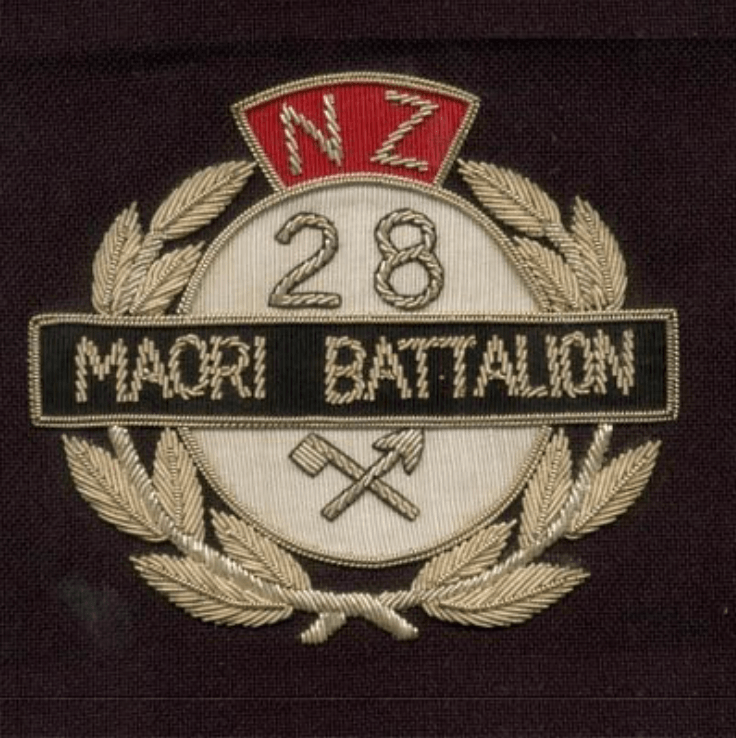
Eighty years ago, in 1946, the last of the 28th (Māori) Battalion returned home from the theatres of war across Europe and North Africa.
They were welcomed into Wellington Harbour with a pōwhiri, karakia, waiata, and a civic reception before the approximately 800 soldiers went their separate ways to begin the long journey back to civilian life.
After disembarking from the Dominion Monarch, the Battalion sang what would become its enduring hīmene, Āu, e Ihu, before Canon Wī Te Tau Huata led those gathered in karakia. A recording can be found here.
Canon Wī had a profound impact on the spiritual wellbeing of the Māori Battalion throughout the war. Grounded in both Christian faith and Māori understanding, his ministry was most evident in his tireless care for the dead and wounded. He supervised the burial of the fallen—not only from the Māori Battalion, but also from other New Zealand units, and at times even enemy forces—conducting services and carefully recording grave locations.
Despite weather and enemy fire, Huata visited each platoon nightly to lead prayers, appointing section leaders to conduct karakia in his absence. Accounts tell of him moving through the trenches without a helmet under heavy bombardment. For his service, he was awarded the Military Cross in 1945.
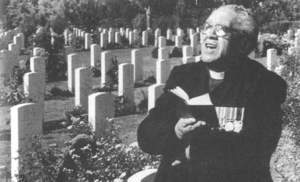
Cn. Wi Huata at a memorial service at Monte Cassino, Italy where he had helped retrieve many of the
fallen soldiers and delivered the burial rights of friends and foe 30 years earlier. Photo/Mark G.
In total, six official chaplains served with the 28th Māori Battalion, all of them Mihinare—a fact that raised concerns among some tuakana hāhi. When chaplains were unavailable, soldiers themselves often led karakia, and some were ordained clergy who ministered as needed.
The Chaplains of the 28th Māori Battalion
Rev. Kahi Harawira (Te Aupōuri), the first chaplain appointed, was a veteran of the First World War and entered the priesthood in 1921. Serving at St Faith’s, Ōhinemutu, at the outbreak of WWII, his previous military experience made him well suited to chaplaincy in a combat setting. He returned to Aotearoa in 1943.
The second appointed chaplain was Wiremu Nētana Pānapa (Ngāti Whātua, Ngāti Ruanui), later Pīhopa o Aotearoa. Although he never served overseas, he ministered to Māori soldiers at Papakura and Ngāruawāhia despite ongoing illness. Declared unfit for overseas service in 1941, he continued moving with troops as needed. He became the second Māori Bishop in 1951, serving until 1968.
Wharetini Rangi (Te Aitanga a Hauiti), ordained in 1925, was gazetted for overseas service in April 1942 and embarked for Egypt shortly after. Popular among the soldiers, he suffered severe hearing loss from shell explosions at El Alamein. Though he briefly returned to the front lines, his condition forced his replacement in early 1943. He later returned to his parish at Ruatoki.
Ngātai Wanoa (Ngāti Porou) stands out as one of the few ordained clergy to serve initially as a combatant. Arriving with the First Reinforcements in 1940, he conducted prayers in te reo Māori while training and later assisted Harawira in services. Wounded in 1941, he was commissioned as an officer in 1942 to allow his appointment as chaplain. Though initially seen as an interim appointment, he left a strong impression and remained overseas beyond his expected return date.
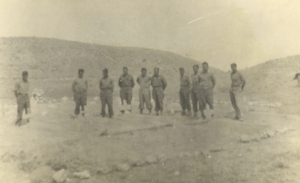
Māori Battalion soldiers near the graves of their comrades, including 2nd Lt. Ngarimu, VC,
who died at Point 209. Padre Wanoa is 6th from the left. Photo/Jackson Whānau
Canon Wī Te Tau Huata, ordained priest in 1940, was appointed chaplain in 1943 and became the most renowned of the Battalion’s chaplains. During intense fighting, he prepared over 100 men for confirmation—an unmatched record among frontline chaplains of the 2nd New Zealand Expeditionary Force.
The final chaplain was Manuhuia Bennett (Ngāti Whakaue, Ngāti Pikiao), son of Bishop Frederick Augustus Bennett. Joining the Chaplains Department in 1944, he arrived in Egypt with the 13th Reinforcements and served until 1946. He later succeeded Bishop Pānapa as Pīhopa o Aotearoa, serving from 1968 to 1981.
This lineage of service continued beyond the war. Bishop Whakahuihui Vercoe, Bennett’s successor, served as an army chaplain in Malaya and Vietnam, while Bishop Brown Tūrei, who followed him, was himself a returned soldier of the 28th Māori Battalion.
Legacy
The legacy of these chaplains did not end with the war. From the battlefields of North Africa and Europe emerged leaders who would shape te Hāhi Mihinare for generations. Their ministry—rooted in sacrifice, compassion, and aroha—affirmed life and faith in the midst of death. As we remember those who have paid the ultimate price of citizenship, and in particular the Māori Battalion this Anzac Day, we also honour those who sustained their spirits, upheld tikanga, and carried hope through the darkest hours.