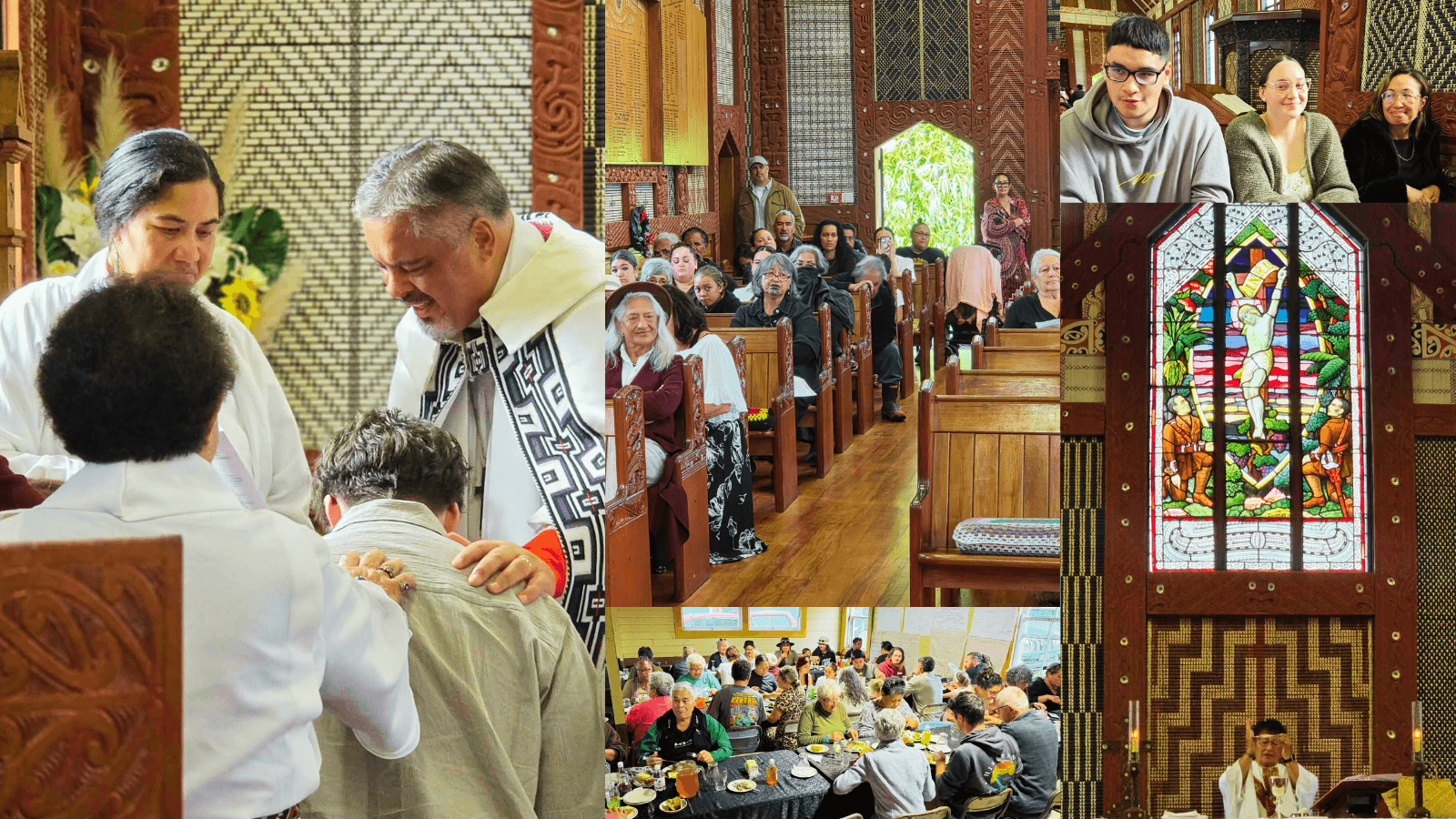
This Easter weekend I returned to the East Coast and to our tipuna whare, Rākaihoea, in Kākāriki, near Ruatoria. This is the place where I spent much of my childhood and it continues to shape me still.
It is said of our tipuna: Rākaihoea tipi whenua, tupu tāngata – Rākaihoea works the land, and grows people. Te Whānau a Rākaihoea have always been the kind to provide house and home, to gather kai from land and sea, and manaaki people in a real and no-nonsense fashion.
Whānau gather at Rākaihoea, Kākāriki, during Easter weekend
Wānanga in session at Rākaihoea whare, Kākāriki
Rākaihoea whare is notable for its no-frills simplicity. And yet it is the home and origin of many acclaimed master carvers including Te Kihirini, Tamati Ngakaho, Te Karaka Ngakaho, and others from the famed Iwirākau school who together have created the most stunning examples of carved whare, churches, and waka in Aotearoa. Their home marae remained plain and unassuming, while they applied their skill and creativity to embellish and flourish others.
Rākaihoea are also a people of whakapono. Names like Peta Whekana (Ringatū), and great Mihinare priests like Rev Pineamine Tamahori, Rev Canon John Thornton Tamahori, Rev Aperahama Tātaikōkō Tāmihere, Archdeacon Anaru Kingi Takurua, Rev Pine Campbell, Rev Pane Kawhia, and Rev Connie Ferris and others can be found among the descendants of Rākaihoea.
Sir Apirana Ngata, himself also a part of Te Whānau a Rākaihoea, played a key role in establishing the first Māori Anglican Bishop and the Bishopric of Aotearoa.
Of this, Sir Apirana said, “We wanted a Māori as the nucleus of a movement and of an eventual organisation that he will create gradually from below — the natural growth rooted in the Māori heart & mind & shaped to suit the characteristics of the people. Truly this ethnology is a fine thing even as applied to the evolution of a Māori Church that takes cognisance of the physical, mental, social & spiritual make-up of the modern Māori — the slightly modified descendant of his tohunga forbears.”
Whānau seated in the beautifully carved interior of Meri Kuia
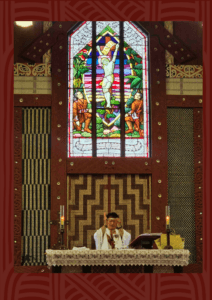
The Easter Sunday service
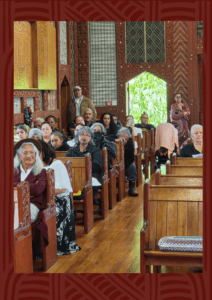
The congregation at Meri Kuia
It was fitting then that we gathered on Easter Sunday morning at Meri Kuia (St Mary’s Church, Tikitiki), the whare that Sir Apirana envisaged as a deep theological statement from Ngāti Porou, to remind ourselves of the legacy of faith that our tīpuna had gifted us.
We remembered Piripi Taumata-a-kura, the Māori evangelist who first brought the Gospel to the Waiapu Valley in 1834. He had been held in captivity in the north for more than a decade, and when he finally returned his people rejoiced. It was as if he had returned from the dead. In his last sermon, preached at Te Ōhākī (St Luke’s, Waiomatatini) on Easter Sunday in 1868, he reflected on the blessing he had received living a resurrected life.
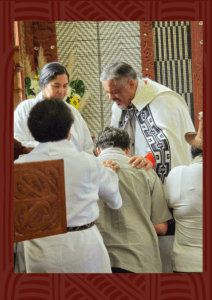
Archbishop Don Tamihere officiating the confirmations
We celebrated this Easter Sunday with 11 baptisms and 21 confirmations at St Mary’s Church, followed by a further 3 baptisms and 17 confirmations at Rākaihoea whare. I’m sure that Piripi Taumata-a-kura would rejoice with us as we strive to live in the way that he did.
This Easter has been a time of wānanga, whakapapa, whakapono, and whānau for me. I reflect a lot on how beautiful and powerful it is to hail from such a simple, plain, and humble whare – and to be counted among such a profound and beautiful people.
The origin of Kākāriki marae speaks to this somewhat. The marae began not as a marae, but as the home of our tipuna kuia Hera Waitekaha. Gradually, the home extended to become a larger kāuta and wharekai. Eventually, a wharemoe was added and given a name that brought the whakapapa of the local whenua together: Rākaihoea. That’s why this place has always had such a special feeling. It has always felt like home.
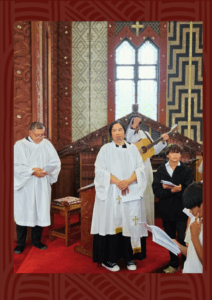
Archdeacon Merekaraka Te Whitu leads the congregation in song
As part of our time at Rākaihoea, which included wānanga and whanaungatanga, we also gave thanks in the whare one last time for all that it has represented to us. The whare is now closed. Soon we will be taking this house down so that in time a new whare will be erected for new generations to live, laugh, and love within.
There is much in this moment to compare with the story of Easter, and much for us to reflect upon. Nothing is more important, however, than our commitment to be there for each other through thick and thin.
Our thanks to all those at Rākaihoea (including Hilton, Ripeka, Pineamine, Ngaire, Ngarimu, Sir Selwyn and the rest of the whānau) and Meri Kuia (Patrick, Harata, and the whānau at Rāhui), and our minita led by Archdeacon Merekaraka Te Whitu, for an amazing Easter weekend.
A special acknowledgement and aroha to those who were baptised and confirmed, and their whānau. May you live as Christ lived. May you live as our tīpuna lived. May you live as Piripi Taumata-a-kura lived.
May you live a resurrected life.
By Archbishop Don Tamihere