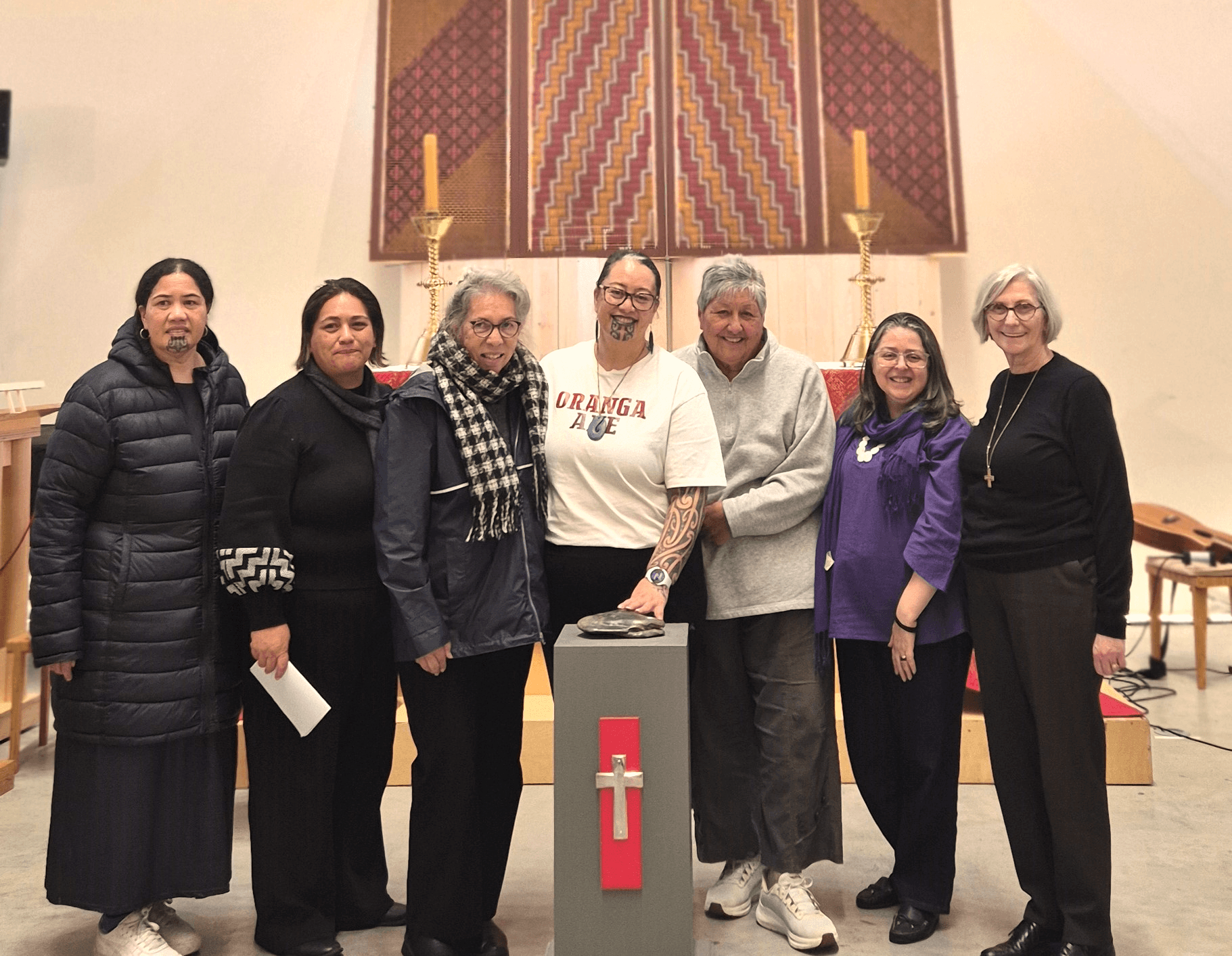
The ordination of Pīhopa Susan Wallace was a moment of significance in the life of the Anglican Church in Aotearoa, NZ and Polynesia. It brought together a number of firsts into a single occasion. Pīhopa Susan is the first wahine Māori to serve as Te Pīhopa o Te Hui Amorangi ki Te Waipounamu. She and her father, the late Bishop Richard Wallace, are the first father and daughter, as far as is known, to hold the same episcopal office in succession within the Anglican Communion. Pīhopa Susan is also the first bishop to bear the moko kauae, the traditional facial tattoo markings of indigenous Māori women.
Alongside Bishop Waitohiariki Quayle, the first wahine Māori and New Zealand born woman to hold episcopal office in this province, we now see the emergence and assertion of the mana and calling of indigenous Māori women to episcopal leadership.
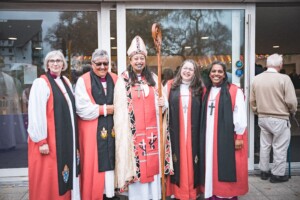
++Kay Goldsworthy, +Wai Quayle, +Susan Wallace, ++Marinez Bassotto, and +Ana Fletcher directly after Susan’s ordination
Pīhopa Susan’s own journey to ordination has helped to reimagine the path to episcopal office. From nomination and electoral discernment, through a retreat shaped by wāhine leadership, to the ordination itself, each stage has reflected a common instinct: not to abandon inherited ecclesial and synodical forms, but to own and adapt them, as the early Māori evangelists did, so they might take root more deeply within mātauranga Mihinare – the developed faith and traditions of our indigenous forebears.
The result is the continuation of a distinctly Mihinare practice, allowing the Gospel to find expression in the language, customs, and wisdom of Māori Anglicans.
+Wai with Te Upoko o te Ika and Rev. Ngira Simmonds (far left)
In 2026, mātauranga Mihinare offers a very different, much more imaginative and lifegiving space for female leadership. Through the care of those who have nurtured and expanded this indigenous practice, it has enabled a safe and nurturing ecclesial environment, where wāhine Māori can discern and pursue episcopal leadership with a greater sense of confidence and belonging.
Yet the deepest current in this story has been the witness of wāhine whakapono – past and present. Time and again, women of faith have quietly challenged and, at times, reshaped the Church’s inherited structures to make room for new forms of leadership. Their faith has remained the fixed point, the source from which courage, patience, and conviction have flowed.
Ven. Mere Wallace (Susan’s mother) and Dr Jenny Te Paa-Daniel
Dr Jenny Te Paa-Daniel, herself a trailblazing wahine Māori leader, said, “Susan’s parents walked alongside me in loyalty and solidarity for many years, so seeing their daughter step into this calling fills me with gratitude. In supporting Susan, I feel I am repaying some of the aroha they showed me. You never forget those who journey with you. And Susan stands in her own right, as a rare taonga whose gifts for leadership make this moment both a joy and a blessing.”
While Bishop Susan stands within a lineage of women who helped make this moment possible, her episcopate is also a reflection of her own tapu and mana, the values instilled by her whānau, and more than four decades of service to the Hāhi, gifts that made her calling to this new role both evident and compelling.
The Retreat – June 3-5, 2026
In the week leading up to the ordination and installation service at ChristChurch Transitional Cathedral, Bishop Susan was surrounded by a remarkable constellation of women at her retreat and service, whose own ministries had quietly redrawn the boundaries of Anglican leadership. Among them were Bishop Waitohiariki Quayle, Archbishop Marinez Bassotto, the first woman Primate of Brazil and of Latin America, and Archbishop Kay Goldsworthy, the first female archbishop in the Anglican Communion.
They were joined there by Dr Jenny Te Paa-Daniel, the pioneering theologian and first female Dean of St John’s Theological College, Archdeacon Ruihana Paenga, the first Māori Dean of Waiapu Cathedral and for Te Pīhopatanga o Aotearoa, and Archdeacon Merekaraka Te Whitu, the first Archdeacon of Horouta for Te Hui Amorangi ki Te Tairāwhiti. Together, they represented not simply a support network, but generations of women whose leadership had made this moment imaginable.
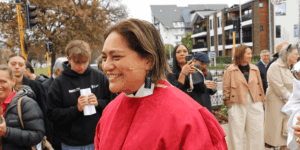
Ven. Ruihana Paenga in the procession outside ChristChurch Transitional Cathedral
The three-day retreat was led by long-time friends who minister on the East Coast, Archdeacons Ruihana Paenga and Merekaraka Te Whitu. Pīhopa Susan said at the retreat, “When I see my two sisters together, I feel a sense of relief and know we’re in good hands.”
Ven. Ruihana, known for her spiritual leadership and pastoral care said, “Retreat is a time for preparing Bishop-elect Susan. She comes into a space where we pray, and we reflect and use God’s word to inspire her ministry and ordination. We surround her so she can separate from her whānau and day-to-day tasks to enter into a sacred space of prayer, contemplation, and asking for God’s guidance.
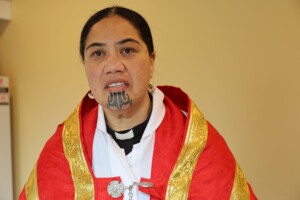
Ven. Merekaraka Te Whitu in the changing rooms, prior to the ordination service
“The biblical story of Queen Esther’s leadership is the scriptural inspiration for this retreat. The story helps us reimagine what it means to stand up for people who are in the minority and, as Indigenous people, to stand up for ourselves, bringing inspiration in times of doubt.”
The first day held a mihi whakatau for the retreat ladies and Archbishop Marinez’s whānau who travelled with her from Brazil.
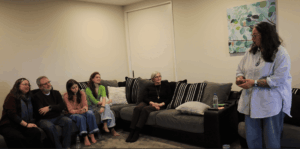
++Marinez, Paulo Bassotto (husband), her daughters Luisa and Laura, and ++Kay looking towards +Susan during the mihi whakatau
After lunch when the visitors left the retreat, Archbishop Don was invited to provide an opening reflection on the story of Esther.
“For me, the story of Esther places her at the heart of a colonial Empire and in direct conflict with its colonising power. So, there’s a lot for us to consider from the point of view of our own experience of colonisation, let alone the system and structure of our own church. The context in which Esther lived was a time where the cost and consequence for challenging empire was very real, and your life could be forfeit. So, for her to act as she did, meant that she had to draw on immense courage and faith.
“Her Uncle Mordecai said to her, ‘You alone are positioned to help. It may be that you choose to remain silent at this time, and it may be that help for your people might arise at some other time and from some other place. But know that by then, both you and I, and the House of your people, will all be gone. Perhaps, instead, you might realise that you are the one. You were born for such a time as this’.
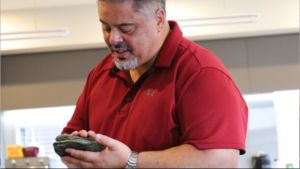
++Don Tamihere blessing Susan’s mauri stone called ‘The Frog’ at the retreat
“And so there we have the whole pivot of the narrative. The choice to be made. The courage to be found. The voice to be raised, of a woman chosen by God, to speak against empire and save an entire people from destruction.
“The story of Esther is incredibly powerful when you consider all its dimensions. How might that apply to you, Susan? If you remain silent as a leader, it may be that the help your Māori people need will somehow appear at another time and from another place. But, in the meantime, all that we are could be lost. Perhaps, instead, you were called and chosen for such a time as this. Called now to work within the system to challenge the system, to deconstruct and transform the system, all without becoming the system yourself. That is the kaupapa of Te Oranga Ake, which is increasingly forming the language we use for our own liberation.
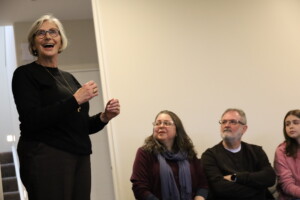
++Kay speaking at the retreat
“Among my people in the Waiapu valley, we have a saying: ‘Waiapu Kōkā Huhua’. That’s often translated unsatisfactorily in English as ‘Waiapu, the place of many mothers’. Kōkā is our word for aunty, or more correctly for the women of our mothers’ and grandmothers’ generations. Huhua speaks of abundance and flourishing.
“As a child raised in the Waiapu valley, I know what it is to be raised by beautiful, powerful, graceful, courageous, and loving Kōkā. If we are to flourish, it is our Kōkā who will make that happen – Waiapu Kōkā Huhua.
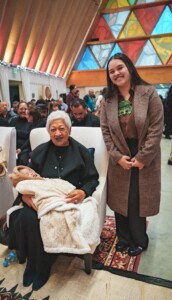
Makau Ariki Te Atawhai with Karera Wallace (Susan’s daughter)
“If Te Hāhi Mihinare is to be liberated, then our liberation must be led by wāhine Māori – indigenous Māori women leaders, born of whakapapa, known and trusted servants, recognised and elevated by their people, called and empowered by God. Women like you, Susan.”
After Archbishop Don departed, the remaining gathering settled into the kind of conversation that drifts effortlessly between memory and testimony. They spoke of the Girls’ Friendly Society and the Mother’s Union, of the moment leadership first demanded that they stand up, speak out, and act, often as one of only a few women in the room.
There were stories of celebrating the Eucharist and catching sight of young girls watching from the pews, and the quiet realisation that this generation would grow up knowing that women could answer God’s call. They remembered confirmations in white dresses, childhood encounters with faith, and the unexpected moments when God arrived precisely when needed most.
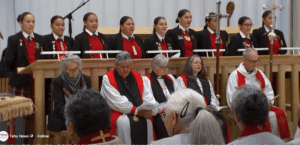
Multi-generations of wāhine whakapono
The conversation moved between pain and possibility, power and hope. What emerged was a shared story of resilience. And the revelation that the province’s only ‘homegrown’ (born and raised in NZ) female bishops have emerged from Tikanga Māori, ‘a gift shared with the whole Hāhi’.
The programme that unfolded over the next few days included reflections on the promises and symbols of episcopal office with Bishop Peter Carrell, a visit from Bishop Ana Fletcher, and discussions with Hukarere Girls’ College Principal Evelyn Leef and Te Aute College Principal Rachel Kingi.
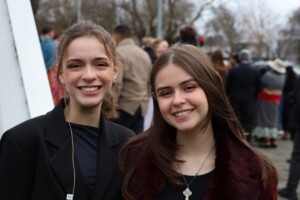
Laura and Luisa Bassotto
By the time the group gathered for the rehearsal service at the Cathedral alongside the Primates and bishops, the purpose of the retreat had come into sharper focus.
Pīhopa Susan reflects, “I headed into retreat blessed with a wonderful retreat team. I started the week feeling overwhelmed. I learned that the role transforms you. You don’t go into it fully formed. By the time we left, I was ready for my ordination, prepared and strengthened by our time together, and with such a sense of calm.”
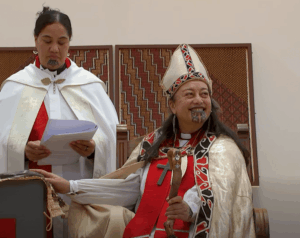
+Susan with Ven. Merekaraka
The Ordination and Installation Service – June 6, 2026
It was a service unlike any other. Though presided over by Archbishops Don Tamihere, Sione Ulu’ilakepa and Justin Duckworth, much of its life and energy flowed from a remarkable gathering of wāhine whakapono. From the women who had shaped the retreat in the days before, to those orchestrating the day itself, such as Archdeacons Ruihana and Merekaraka, leading prayers, kauwhau, music, and liturgy, their presence was unmistakable. Women were everywhere in leading roles.
It was visible on the livestream, but even more palpable in the Cathedral itself. There was a sense that this moment had been carried into being by generations of women whose faith had endured, adapted, and persevered. What filled the space was more than ceremony. It was wairua, conviction, and the quiet confidence of women who knew both the cost and the gift of answering God’s call.
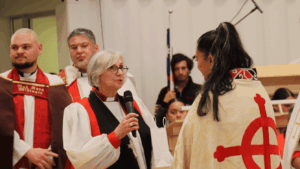
++Kay gifting +Susan during the service
Archbishop Kay reflects, “The way in which Susan first walked in with a crowd of women who sang her in, like an announcement [karanga]. It reminded me of something Bishop Jo Bailey Wells often speaks about, the call and response between God, community, and one another.
“What we witnessed was more than an installation. It was a community recognising God’s call and responding together. As Susan said yes to God and the Church, the Church was also saying yes, to new voices, new possibilities, and to the gifts of women.”
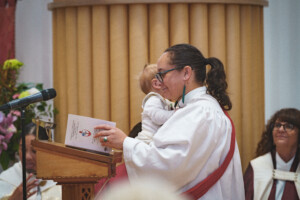
Rev. Puawai Swindell
The Rev. Vianney Douglas led the karakia whakapono, while the Reverends Wendy Heath and Puawai Swindell of Te Hui Amorangi ki Te Waipounamu guided key moments of the liturgy. When the time came for Pīhopa Susan to be presented, she was surrounded not only by colleagues, but by many of the women who had shaped her journey.
The kauwhau was delivered by Archbishop Marinez Bassotto in Portuguese, her words carried across languages by her daughter Laura, who translated into English.
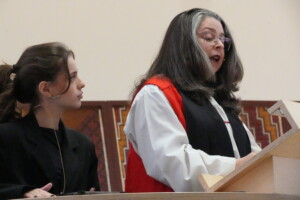
++Marinez delivering the kauwhau with Laura
In her kauwhau, Archbishop Marinez said, “Susan, as a Māori woman, a child of this land and this ocean, you have an important role to play in the current landscape of the Church and the world. I am certain that you bring a different perspective, a different sensibility and a different approach. You have already been exercising, and will continue to exercise, the ministry to which you have been called by God – in your own unique way.”
Archbishop Marinez Bassotto’s full kauwhau
Earlier, her youngest daughter, Luisa, stepped forward to read the Scriptures, also in Portuguese, a small but poignant reminder that vocation is often handed on from one generation to the next.
Following the ordination and installation service, Archdeacon Ruihana led the gathering from the gravity of the occasion into Eucharist.
At the end of the long day, Pīhopa Susan said, “Beautiful karakia, filled with and lifted by reo from around the world, the reo of our wāhine, the karanga, the pao, the beautiful dulcet tones of our kōhine from Hukarere College, and the voices of those who came to support. So many turned up, bringing together threads that I have some connection with, each drawn closer, woven and knitted more tightly in aroha and with such a sense of joy. What a wonderful day!
“From being at the Transitional Cathedral, that used to be the site of St John’s. It felt like the closing of another circle from the days I was at college and had karakia there. It was at the College with Archbishop Turei that I decided to accept a programme of confirmation.”
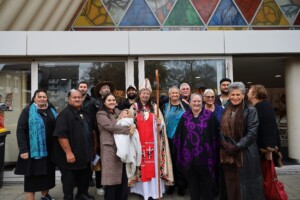
+Susan with her whānau
Designing a Safer Process – COEL 2024 – 2026
A desire to better support Bishops and their whānau led Te Rūnanga Whāiti to establish Ko Amorangi ki Mua, the Commission on Episcopal Leadership (COEL) in 2024. In the six months leading up to the Electoral College for Te Hui Amorangi ki Te Waipounamu, COEL, chaired by Professor Khylee Quince and with a membership that was fifty-five per cent women, developed a standardised framework for Electoral Colleges that may be adopted across Tikanga Māori.
Central to its work was ensuring the process was safe and just, particularly in response to concerns that some participants in the past had faced gendered, personal, and intrusive questioning that appeared designed less to discern vocation than to diminish women seeking leadership. The last Electoral College Tikanga Māori held was in 2019 where Pīhopa Waitohiariki Quayle was elected.
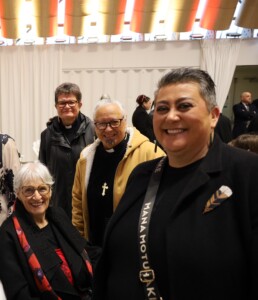
Khylee Quince, Chair of COEL, attending the service (far right)
One of the most significant changes was that nominations could come only from approved groups and pariha within Te Hui Amorangi ki Te Waipounamu, not from individuals. The shift encouraged communities to wānanga, discern, and test potential leaders long before the Electoral College convened. By the time the process reached its final stage post the vetting and screening, two women remained: The Venerable Susan Wallace and The Venerable Hannah Pomare.
A defining moment had arrived: the next Pīhopa o Te Hui Amorangi ki Te Waipounamu would be a wahine Māori. In doing so, the election would charter a new course for the Hui Amorangi, Tikanga Māori, and the Three Tikanga House of Bishops.
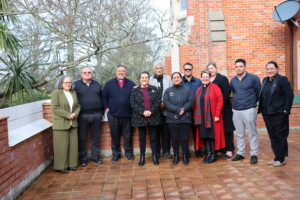
COEL meeting at Hoani Tapu in 2025
Electoral College – 17 & 18 April, 2026
The news of two women candidates soon travelled beyond Aotearoa. Among those taking notice was the Right Reverend Anthony Poggo, Secretary General of the Anglican Communion, who wrote to Archbishop Don offering prayers and words of encouragement for the Venerables Susan and Hannah, as they entered the discernment process.
Letter from Bishop Anthony Poggo
Given the nature of the final candidates, an all-women ministry team, led by Pīhopa Waitohiariki Quayle, Ven. Merekaraka Te Whitu, and Rev. Vianney Douglas, guided the College in prayer and worship, providing Eucharist, waiata, pastoral care, and a steady spiritual presence in Ōtautahi.
As Commissary, the Most Reverend Dr Don Tamihere drew on decades of experience, including his own elections, to prepare a tikanga framework that was circulated before the gathering and unanimously adopted by the College on its opening night.
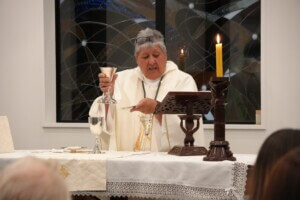
+Wai taking Eucharist on the opening night
The tikanga required discipline: no digital devices, no recordings, and complete confidentiality. The outcome remained known only to those present until the nomination received the necessary sanction of the House of Bishops and General Synod Te Hīnota Whānui.
The next morning, attention turned from preparation to discernment. Before voting began, Archbishop Don presented a mauri stone called ‘Te Whakapāohotaka’, passing it around the room so that each delegate might hold it for a moment. The gesture was simple but weighty, a shared commitment that whatever differences of opinion emerged, the process would be conducted in the spirit of Christ, with humility, grace, and care for one another.
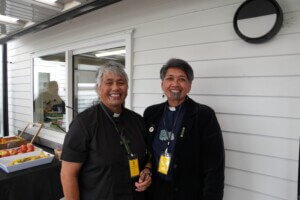
The Reverends Vianney Douglas and Hera Smith
The room was set up with the House of Clergy on the left facing the Commissary, and the House of Lay on the right. Behind the House of Lay were official observers from Te Rūnanga Whāiti and the General Secretary, Canon Michael Hughes.
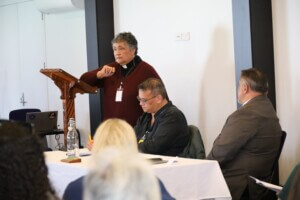
Ven. Hannah Pomare presenting to the Electoral College
Each candidate was given up to ninety minutes to speak, responding to three pre-determined questions before taking further questions submitted in writing by delegates and moderated by the Commissary. The format was deliberate, creating a safe space for the wāhine candidates.
When each presentation concluded, the candidate left the room, and the College entered a period of open conversation. The tone remained thoughtful and measured. People spoke candidly, but with the care and respect that had characterised the gathering from the outset. A particular feature of this time was the honour, love, and respect expressed for both candidates.
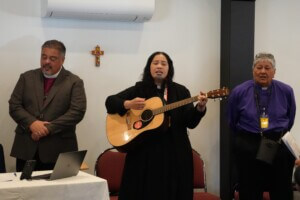
Ven. Merekaraka leading waiata
Voting followed. As delegates came forward one by one to cast their ballots, the female ministry team sustained the room with joyous waiata to break the tension – and some non-Mihinare waiata and iwi anthems that drew laughter from the crowd and faux-scorn from seniors. By the conclusion of the second official ballot, the College had discerned its nominee: the Venerable Susan Wallace.
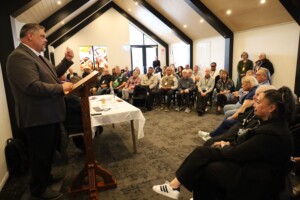
++Don congratulates Susan on becoming the nominee
Archbishop Don stood immediately to again express the deep honour, love, and respect held for both candidates, to pray for them, and to acknowledge the sacred calling that had now come to Venerable Susan. The Electoral College adjourned with prayer, glorious waiata, and celebration.
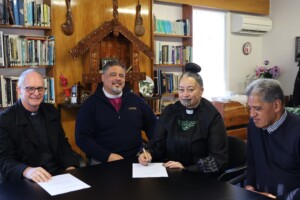
From nominee to Bishop-elect, Susan signs the contract prior to ordination.
Wāhine Whakapono, Wāhine Pīhopa
Pīhopa Susan’s ordination was significant not only because of the deserving woman she is, but because of what the moment made possible. For many homegrown women in the Hāhi, it offered another opportunity to see themselves fully reflected in the life of the Church, raising once again enduring questions about leadership, representation, and the shape of episcopal ministry in our province and the Anglican Communion.
Behind the moment stood leaders such as Archbishop Don Tamihere, who helped cultivate an environment in which the leadership of wāhine Māori could be exercised with confidence and received with integrity.
Yet the moment pointed to something larger than a single ordination. Behind it stood generations of women whose work sustained pāriha, nurtured communities, formed leaders, and carried the faith forward. In many ways, her ‘homegrown’ episcopacy is as much a reflection on wāhine whakapono in Tikanga Māori as it is a celebration of a new bishop.
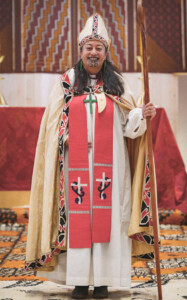
Pīhopa Susan Hinemoa Wallace
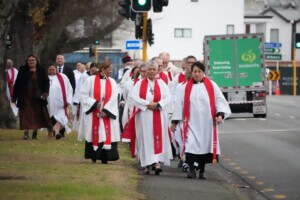
Moving towards ChristChurch Transitional Cathedral
A Reflective piece by Mua’ausa Tuvaelagi Barlow, Communications Manager, Te Pīhopatanga o Aotearoa.