Kua whakaaturia e ia ki a koe, e te tangata, te mea pai; a he aha tā Ihowa e rapu nei ki a koe, heoi anō ko te whakawā tika, ko te pai ki te tohu tangata, ko te whakaiti me te haere tahi i tōu Atua? Micah 6:8
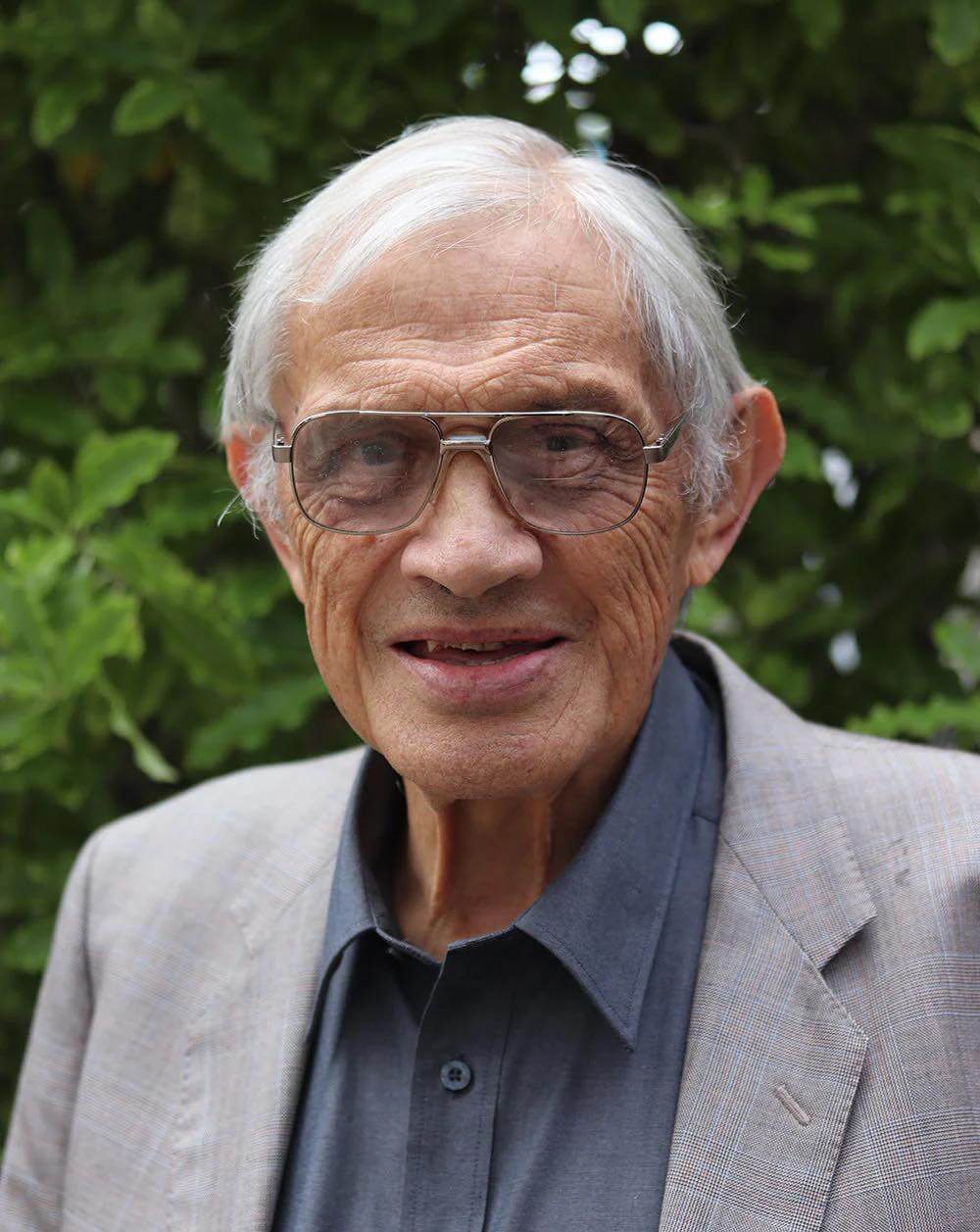
Professor Whatarangi Winiata reflected the spirit of this scripture. His life was marked by joy, gratitude, and deep understanding, lived with a strong sense of faith.
He passed away on Wednesday, aged 90, surrounded by his whānau.
Widely recognised for his work and advocacy for Māori—particularly his iwi of Ngāti Raukawa, and neighbouring iwi Ngāti Toa Rangatira and Te Āti Awa—Professor Winiata was also a tireless and committed advocate for Te Hāhi Mihinare Māori.
He grew up on the family farm, where he first encountered Te Hāhi Mihinare through the Māori vicars of Rangiātea, who made monthly visits to Ngātokowaru marae near his home, north of Levin.
He later dedicated much of his life to the Hāhi, serving on various commissions, standing committees, synods, and vestries.
As only the second Māori graduate of the University of New Zealand (as the tertiary system was then known) to receive a Bachelor of Commerce, he applied his accounting skills managing the accounts of the Anglican Māori Pastorate of the Diocese of Wellington, before pursuing further study in North America.
During the 1960s and 1970s, he and his wife Francie lived in Canada and the United States, where they engaged with the challenges faced by Indigenous peoples seeking self-determination. They returned to Aotearoa in 1975 with their four children—Pakake, Huia, Petina, and Kimo—and a clear commitment to contribute to change.
This included a desire to contribute to change within the Hāhi. What follows is a brief account of Professor Winiata’s role in shaping the church as it stands today.
Soon after returning to Aotearoa, a meeting with Bishop Manuhuia Bennett led to Winiata’s appointment to a General Synod Commission. Alongside Bishop Bennett and others, he helped examine the mission of the Church among Māori and the place of Māori within it.
The Commission’s report ultimately contributed to the establishment of Te Pīhopatanga o Aotearoa, a Māori bishopric with its own recognised authority within the Province of New Zealand.
At the 1984 General Synod, Winiata successfully proposed the establishment of a Bicultural Commission to study the Treaty of Waitangi and consider how the Church might engage in bicultural development, while also advising on how the principles of the Treaty could be embodied across church life.
By 1990, this work led to proposals to revise the Church’s constitution and structure. This process resulted in Te Pouhere, the 1992 constitutional reform under which the Church continues to be governed.
In 1998, the General Synod considered concerns regarding government cuts to social welfare benefits. Winiata proposed an amendment calling for a march to Parliament in response.
Three months later, in September, 40,000 people took part in marches across the country in what became known as the Hīkoi of Hope. Around 8,000 gathered at Parliament, where a Liturgy of Hope and Lament was held.
In 2012, some 34 years after his first General Synod, he again successfully submitted a motion on behalf of Tikanga Māori.
Motion 27 affirmed the tino rangatiratanga of Te Pīhopatanga o Aotearoa over its affairs and advanced a claim to half of the assets of the St John’s College Trust Board.
The motion was passed unanimously; however it remains unrealised 15 years later. In 2025, Archbishop Don Tamihere prepared a paper based on Motion 27 in a fresh bid to achieve the long-held ambition of Whatarangi, and the Hāhi.
Archbishop Don reflected that “The plight of the Māori Anglican Church has remained a parallel of the experience of all iwi under Te Tiriti o Waitangi – the promises made to us have been many, the language soaring, the patience and generosity of Māori unrelenting, and yet after all these years we remain constrained and diminished by colonial and neo-colonial systems. Our Pākehā brothers and sisters as ever are beloved to us, but their structures have proven to be less so.
“Pāpā Whata showed us the way. His was that calm, quiet but powerful voice, backed by unassailable logic and irresistible spirit, that stood steadfast and resolute in defence of our tino rangatiratanga. As a young minister growing up in the Church, our generation was in absolute awe of him. The Church owes Pāpā Whata, Aunty Francie, and their entire whānau a great debt, and one that we can only repay by continuing to stand resolutely as they have.”
Ahead of that 2012 General Synod, Professor Whatarangi spoke to Anglican Taonga about his long-standing commitment to the Church. Reflecting on his motivation, he spoke of the fulfilment he found and the potential he saw in the Gospel of Christ:
“In terms of the Māori situation, I can see encouragement in the key messages of the Gospel of Christ. I think that what the Church teaches has the potential to help fulfil Māori aspirations.”
In the same publication, Professor Winiata—also the inaugural president of the Māori Party and a long-time advocate for Māori sovereignty and the honouring of Te Tiriti o Waitangi—encouraged the Church to speak more strongly on partnership between Māori and the Crown:
“The best Māori can do is make recommendations. It’s not the partnership anticipated by the Treaty of Waitangi.
“As the Church, we need to say: ‘Nation: you’ve got to be serious about partnership.’ That is what the Church became—serious about partnership.”
This week, the Church reflects and acknowledges Te Pouhere on 7 June – a moment of history in which he was a chief advocate and architect.