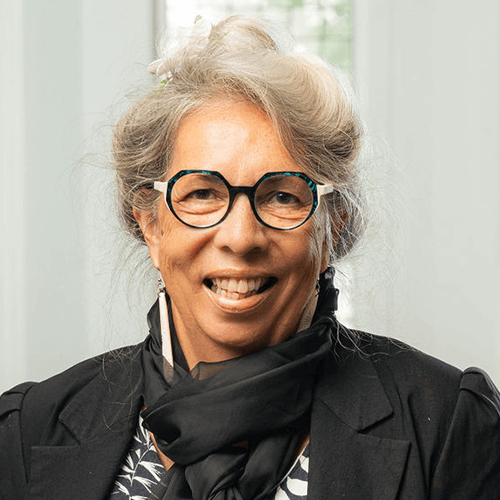
Professor Emeritus Dr Jenny Te Paa-Daniel’s appointment as a Companion of the Royal Society Te Apārangi is the latest milestone in a groundbreaking career. A trailblazing Māori theologian, educator, and advocate for peace and justice, she has broken barriers, inspired generations of learners, and made a lasting contribution to scholarship and public life in Aotearoa New Zealand.
“It’s cliché in some ways when people say, ‘I feel so honoured, I feel so humbled.’ But for me, it was a stunning realisation that my academic or intellectual endeavours, which are primarily in theology, had been noticed in this way,” she says.
“I have always wanted to restore Theology to its original status as ‘queen of the sciences’! That was its medieval standing, so its neat, it takes a Māori to take on the restorative task, this time in its fullness, including indigenous epistoemology!”
The Royal Society Te Apārangi, New Zealand’s independent academy of researchers and intellectual leaders, recognises outstanding achievement across science, technology, the humanities and the social sciences. Dr Te Paa-Daniel is one of 13 new Companions elected by the Society, and one of only a small number of theologians to receive the honour, in recognition of her sustained and significant contribution to theological education and Indigenous leadership in Aotearoa New Zealand and around the world.
“I’m so proud of that because I do believe that theology as an academic discipline has so much untapped potential to contribute to the public square by helping our society become more just and fairer.”
For more than three decades, Dr Te Paa-Daniel has written, researched, taught and spoken about gender and social justice, Indigenous rights, theological education and race politics — all through a mātauranga Mihinare perspective.
In 1995 she became the first Indigenous lay woman in the world appointed to lead an Anglican seminary when appointed to lead St John’s Theological College. Her work has led to roles on global church bodies, Anglican and ecumenical. She also holds five honorary doctorates from institutions around the world.
Dr Te Paa-Daniel is excited by the potential for theological education, and Māori theology in particular, to gain greater public and academic visibility. She is also hopeful more wāhine Māori could pursuit theological education.
“We need to make theology the discipline of liberation and hope and freedom. I think it was always intended to be, and that even we as Māori have tended to narrow the focus of theology down to those parts that are applicable only to those seeking ordination. I think that has been its limitation. Most women I know who are interested in theology already have careers in some other way, but they are looking to theology for that one aspect that provides them the key to liberation, hope, freedom and justice.”
Her recognition by the academy of intellectuals is also an acknowledgement of the careful, thoughtful work of Māori theological giants of the past, who were often overlooked as academic leaders in previous decades.
“And that, to me, is a grave historic injustice that needs to be redeemed. My approach in theological education is to have all of that in mind and to try, as much as we can, to recapture the wisdom, insight and extraordinary theological understanding that they captured better than any of us in this contemporary era.
“It was profoundly theological, yet they never saw it as such because, of course, the academy never saw it as such, and they were never validated in that way. What I see by way of redeeming that situation is bringing back exactly what they left us with: their legacy of kaupapa Māori, Mihinare Māori knowledge, understanding and wisdom.”
For Dr Te Paa-Daniel, becoming a Companion is not simply a personal honour, but a responsibility to use the Society’s influence to widen access, affirm mātauranga Māori and mātauranga Mihinare, and help open the way for future generations of Māori theologians and scholars.