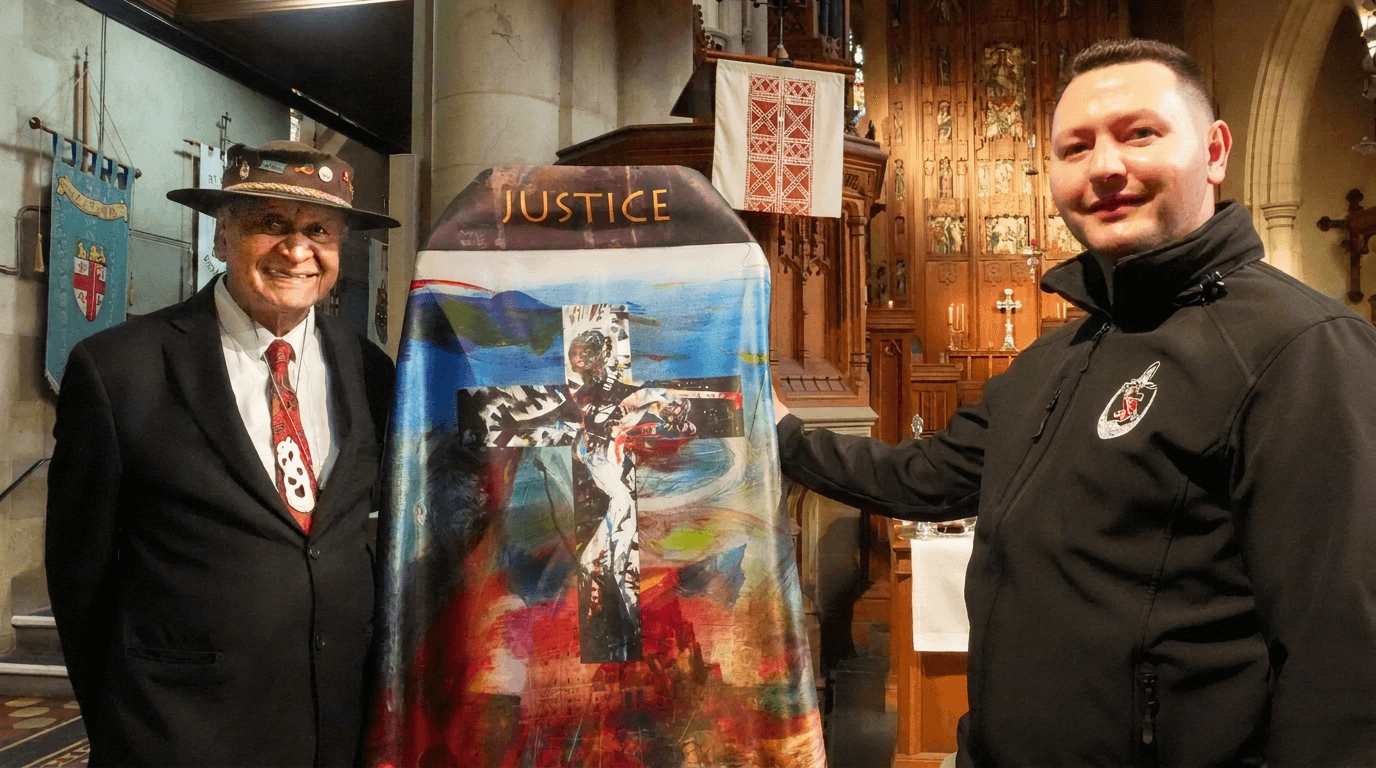
The Anglican Indigenous Network (AIN) is meeting in Adelaide, Australia, from 4 to 7 September 2026, ending a seven-year hiatus in face-to-face gatherings.
Hosted by The Right Reverend Chris McLeod, National Aboriginal Bishop, at St Peter’s Cathedral in Adelaide, the gathering is the first time the network has met in person since its General Meeting in Hawai‘i in 2019.
“It’s about bringing us together and seeing what we can do, and how we can support each other as Indigenous minorities in the Anglican Church, and know that we’re not alone,” said Bishop Chris.
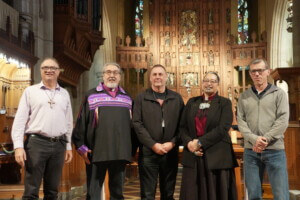
Abp Mark Short, Abp Chris Harper, Bp Chris McLeod, Bp Susan Wallace and Bp Matt Brain
“We’ve all been progressing Te Oranga Ake (flourishing), but it is time to reconnect as AIN to face new shared challenges,” said Archbishop Don Tamihere.
“We can discern what this moment is asking of Indigenous peoples, and what God may be calling us to offer the wider Church. It is an opportunity to bring our mātauranga mihinare to life to restore right relationships and address injustices.”
Significant developments for Indigenous Anglicans in recent months have given renewed importance to the timing of the gathering.
The Anglican Church of Australia’s General Synod made the landmark decision to fund full-time National Aboriginal and National Torres Strait Islander Bishops, serving as Assistant Bishops to the Primate.
The decision came after consultation with the National Aboriginal and Torres Strait Islander Anglican Council (NATSIAC) to elevate First Nations leadership within the church. NATSIAC members met in the lead up to the AIN meeting.
In Aotearoa New Zealand and Polynesia, General Synod Te Hīnota Whānui last month assented to Bill 15, enabling Tikanga Māori to exercise tino rangatiratanga over 50 percent of St John’s College Trust Board funding.
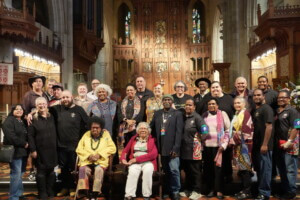
NATSIAC members
The very first AIN meeting was held at St John’s Church in Hawai‘i in 1992, where the Anglican Indigenous Network adopted its official name and mission statement. The Network affirmed the shared spirituality, concerns, gifts and hopes of Indigenous Anglicans, alongside a commitment to bring Indigenous leadership and vision more fully into the life of the Church.
AIN delegates represent Indigenous communities who are minorities in their own lands, including Aotearoa, the United States, Hawai‘i, Canada, Australia and the Torres Strait Islands.
Tikanga Māori representatives at this year’s gathering include Bishop Susan Wallace of Te Hui Amorangi ki Te Waipounamu, Levi Torrey of Te Hui Amorangi ki Te Upoko o Te Ika, and Bardia Matiu and Tuvae Barlow of Te Pīhopatanga o Aotearoa.
Bishop Susan is also scheduled to give the kauwhau at Sunday evening’s Choral Evensong.
AIN is an official network of the Anglican Communion Office (ACO) with representative Martha Jarvis attending as a conduit between the Network and the ACO.
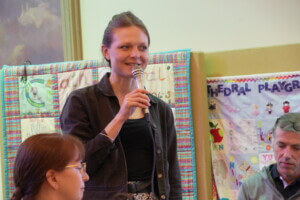
Martha Jarvis from the Anglican Communion Office
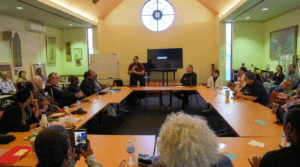
The first day opened on Friday with a strong sense among delegates that the Church is approaching a significant turning point. The discussion echoed the Network’s mission statement, which speaks of God leading the Church into a new chapter in which the full partnership of Indigenous peoples is essential.
Bishop Susan Wallace reflected on the journey of Tikanga Māori, from the constitutional promise of Te Pouhere and the vision of Te Oranga Ake, through to the assent of Bill 15 at General Synod.
“From an Indigenous perspective, we have to test ourselves when we have resources. Something great is coming and the answer exists in our Indigenous knowledge,” said Bishop Susan.
Levi Torrey spoke about the flourishing youth ministry within his Hui Amorangi, while also highlighting the challenge of sustaining and expanding that work as its sole youth worker.
Despite the diversity of countries, cultures and ecclesial structures represented around the table, Indigenous Anglican leaders identified a striking convergence in the challenges confronting their communities.
These included navigating inherited colonial systems, limited resources, declining congregations, shortages of Indigenous clergy and ministry workers, and insufficient representation within Church decision-making.
Archbishop Chris Harper, National Indigenous Anglican Archbishop of Canada, spoke about a season of renewal and the work of Sacred Circle. He highlighted the Sacred Circle Covenant, presented to General Synod in 2023, which articulates the relationship between Sacred Circle, Indigenous ministries and the wider Anglican Church of Canada.
He also reflected on Our Way of Life, a document expressing who Indigenous Anglicans are and how they understand their place within the Church, including their right to shape ecclesial life according to their own contexts, cultures and languages. At the same time, he acknowledged the continuing tensions Indigenous Anglicans encounter within inherited colonial and liturgical structures.
Delegates also examined the practical consequences of diocesan boundaries and canonical structures, which can divide Indigenous communities or constrain their capacity to determine how ministry and resources are organised for their own people. These tensions are particularly evident where significant Indigenous populations live in urban centres outside established Indigenous ministry structures.
A recurring theme was the need to move beyond models of Church life centred primarily on authority, jurisdiction and institutional management, towards structures grounded more deeply in relationship, community and Indigenous self-determination. Delegates argued that such a shift could release new possibilities for ministry and enable worship and mission to emerge more authentically from Indigenous contexts.
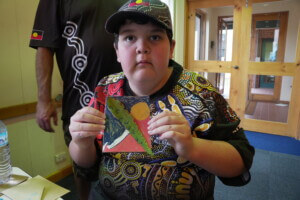
The youngest observer at the AIN meeting
Across the Network, delegates emphasised the distinctive gifts Indigenous peoples bring to the Church through relationships with land and water, storytelling, song, spirituality and community. These were understood not simply as cultural contributions, but as sources of theological insight capable of enriching the life and mission of the wider province.
Despite the challenges, the gathering carried a strong sense of hope and renewal. Delegates spoke about strengthening Indigenous leadership, creating safe pathways for young people into faith and ministry, exercising greater authority over resources, and drawing upon Indigenous knowledge to shape the future of the Church.
Underlying these conversations was an aspiration to move Indigenous Anglican communities beyond survival towards flourishing, while offering their gifts to the wider Anglican Communion. Relationship, community and Christ remained at the centre of that vision.
Uncle Ray Minniecon of Scarred Tree Ministries in Sydney closed the hui with a reflection on Psalm 116:12, the same verse posed by Rev. Richard Johnson in the first Christian sermon to Australian settlers: “What shall I render unto the Lord for all his benefits toward me?”
Uncle Ray suggested that, for Indigenous peoples, perhaps the response might now be found in the verses that follow: “I will take the cup of salvation and call upon the name of the Lord.”