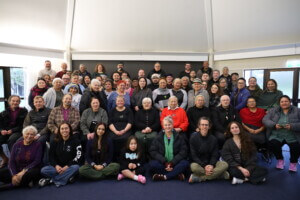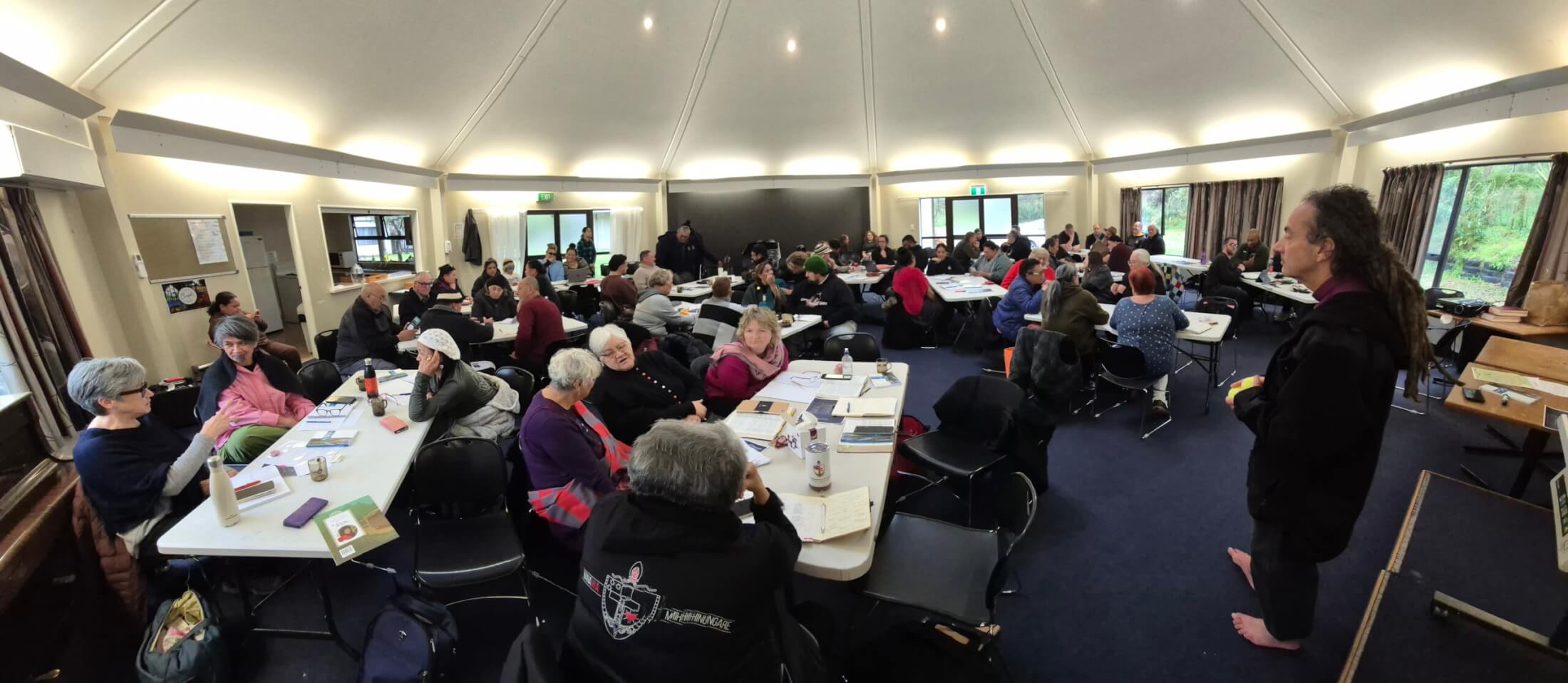
Te Takawai| Christian Studies students gathered at El Rancho Camp & Conference Centre in Waikanae from 24 to 26 July 2026 for a weekend noho on formation and discipleship, led by Archbishop Justin Duckworth, with Bishop Peter Carrell joining the gathering to tautoko the ākonga.
Now in its second year and second semester, Te Takawai usually brings ākonga together through weekly online classes. The noho marked the first time ākonga from all four participating Hui Amorangi had gathered together in person.
Archbishop Justin led the weekend, drawing on many years of experience walking closely alongside around 100 people in intentional discipleship, accompanying them on their journey with Jesus.
“There was this fella who had 12 disciples,” he said, as the room laughed.
“How did Jesus do it?”
Looking at Mark 1:14 and the call of the first disciples, ākonga reflected on the people Jesus chose. They were not chosen because of giftedness or status. They were ordinary, sometimes dysfunctional people, but they were ready to be chosen and teachable. Jesus gave the karanga and they responded.
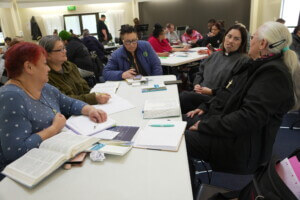
Jesus walked with his disciples while doing the work of the Kingdom. They were active in mission, healing, teaching and confronting, before coming back together to debrief and learn from him.
For Archbishop Justin, discipleship happens together while doing the mission of God. It does not happen by staying within our comfort zones.
A former street performer, juggler and fire artist, Archbishop Justin brought Nerissa Kaa to the front to try juggling three tennis balls. The exercise demonstrated another part of formation, the need to unlearn in order to learn.
Discipleship, he explained, can be like reaching a false peak on a mountain range. Sometimes you have to go back down before climbing towards the next peak. Learning new ways can require unlearning what has already become familiar.
Archbishop Justin also introduced ākonga to the Kairos Circle, a model he uses in discipleship. Kairos is a sacred moment in time when God is trying to get our attention.
The circle begins by observing what is happening and exploring what God may be saying. The next step is to discuss it with others in the Body of Christ, before making a plan, inviting others to hold us to account, and then acting.
“I haven’t told you what God said to you,” he told ākonga. “It’s between you and God.”
The Kairos Circle is not magic, he said, but a regular discipline. The importance is not having the perfect model, but having one that people become fluent in, can practise deeply and pass on to others.
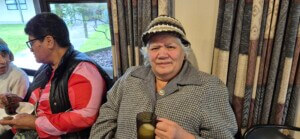
Rangimarie Hall
“Justin hit it on the nail when he was saying we’ve all got our own journey. I was brought up with everything will turn out fine. So when you’re full of joy you share it out because people can see your belief in God, by the way you talk, the way you look – they say I look young,” Rangimarie Hall, Saint Paul’s Memorial Church, Pūtiki.
That passing on is central to discipleship. Archbishop Justin reflected that while his community became good at discipling people, they had not always shown those people how to train the next generation.
The goal is to create a whakapapa of discipleship, where what is learned is practised, lived and passed on.
Throughout the weekend, ākonga explored the Kingdom of God, community and mission, and the relationships needed to sustain discipleship, including trust, conflict and commitment.
“I haven’t met anyone who doesn’t want the Kingdom of God, a world without domestic violence, with a healthy environment and world peace. You can’t have the Kingdom without the King,” Archbishop Justin said.
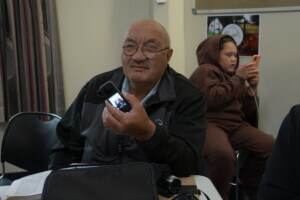
Rev. Doug Foley
“I’ve had great reassurance of how God works when you step out in faith and make sacrifices. I know what it’s like to sacrifice my career to go into ministry and to be a minita. It’s been 30 years this year. I’ve really enjoyed today,” said Rev. Doug Foley from Waiariki in Te Manawa o Te Wheke and St Barnabas Church in Waiapu.
For Te Takawai ākonga, the weekend was an opportunity to move formation beyond the online classroom and into learning, practice and mission.