The affirmation of Tino Rangatiratanga and a claim of 50 per cent share of resources should be viewed as an act of reciprocity by Te Hāhi Mihinare, the Anglican Church.
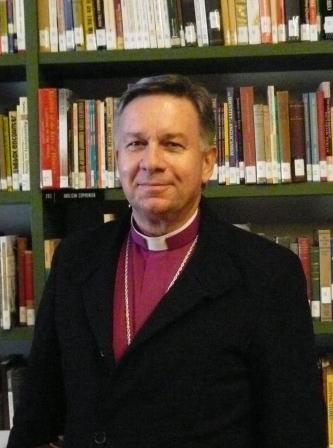
So says Archbishop Emeritus Sir David Moxon, citing the early sustenance provided by Māori toward missionaries and mission that spread the Gospel, well before the 1840 Treaty of Waitangi.
“If you look at the arrival of Pākehā in 1814, there was resource sharing by Ruatara, Ngāpuhi and Rangihoua Pā, to the Pākehā missionaries such as Marsden, Kendall and Colenso and others. And it was actually more than 50%.
“Those chiefs provided houses, labour, midwives, and local knowledge. The entire capacity of the pā was at the availability of Marsden’s missions. That’s the only reason missions got going and were sustained between 1814 and 1840.”
Tau Manako, inspired by Jubilee, seeks to fulfil the long-held aspirations and intentions of the Anglican Church, notably as set out in Te Pouhere – the 1992 constitutional reforms and in Motion 27, that of the late Professor Whatarangi Winiata in 2012, asking for affirmation of tino rangatiratanga of St John’s College Trust Board assets.
For Sir David, Motion 27 is not primarily about money or assets, but about giving practical expression to the covenantal promises of Te Tiriti and the Church’s commitment to tino rangatiratanga.
“It’s a way of recognising that Māori sustained us well beyond 50 percent. This is not greed or sentiment. This is a matter of simple justice and active memory and rights of reciprocity and responsibility,” Sir David says.
For Sir David, the roots of Motion 27 stretch back well before 2012, to the covenant relationship established at Waitangi in 1840.
At the heart of the discussion is the relationship between the Treaty of Waitangi, and the Anglican Church. For those gathered at Waitangi in 1840, the Treaty was understood as a covenant – a sacred relationship based on mutual commitment, trust, partnership, protection, reciprocity and the affirmation of rangatiratanga.
“What you’ve got in the hard wiring, the thinking, the preparation, the karakia, the intention of the Treaty – it’s got Mihinare in its DNA. So, I don’t think you can get anything more profound or generic than that, and we have to respond to it as a tapu document, which cannot be desecrated.”
Sir David says Māori and Pākehā church leaders became prophetic voices as the Treaty was increasingly undermined by commercial and political interests.
“I see very consistent calling for the honouring of the Treaty as it began to be forgotten and trampled,” he says.
Figures such as Hone Heke, Henry Williams, William Colenso, Robert Maunsell and Bishop Suter challenged breaches of Treaty promises and appealed to Britain to honour its commitments.
Those prophetic voices, though small in number, continued to shape the Church through the decades, eventually influencing developments such as the 1992 constitutional reforms that created Te Pouhere.
Sir David shares an example of his own, during his time as the Bishop of Waikato, the church at the base of Taupiri was returned to Waikato Tainui – an act seen by some as one of kindness.
“400 yards across Te awa o Waikato, there was the early missionary Harriet and Benjamin Ashwell from 1836, who were sustained entirely by whare, māra (gardens), orchards, and protection. Their way of life was a 90 per cent resource share by Māori to Pākehā. This was not kindness; it was justice, it’s our DNA, and mana enhancement the other way,” he said from the pulpit at the time.
“We need to see it in that light. And I would say that with 50% resource sharing implied by the Treaty, reciprocal to our story from the beginning, we now want Māori missions to thrive and survive to their max, with all the ihi and wehi they have. And what benefits Māori under that covenant benefits everybody, because when you see a mission develop and elevate and penetrate and create, that’s got to be good for the Gospel, and that’s got to be good for everybody.”